

Sim Racing 101
The Building Blocks of a Racing Sim Cockpit
See how every profile, bracket, and plate plays a role in making your simulator solid, adjustable, and race-ready.
Anatomy: What It Is
Every racing cockpit is made up of carefully designed profiles, plates, and brackets. In this section, we show you each component and explain its physical structure, what it is, how it’s shaped, and how it fits into the rig.
Physiology: What It Does
Every part in your cockpit has a purpose. Here, we explain how each profile, plate, or bracket contributes to stability, adjustability, and performance, how it works and why it matters while you’re racing.
Cockpit Frame Components
Long Side Profiles
Anatomy: The main horizontal aluminum profiles running along each side of the cockpit’s base.
Physiology: They form the backbone of the rig, supporting the structure and distributing forces evenly from front to back.
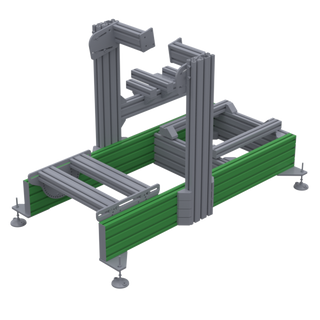
Cockpit Frame Components
Base Spreaders
Anatomy: A horizontal aluminum profile that connects the two sides of the cockpit’s base.
Physiology: It spreads the load and keeps the rig square and stable, preventing any inward or outward flex under pressure.

Wheel Base Components
Wheel Uprights
Anatomy: Vertical aluminum profiles that rise from the base to hold the wheel mount assembly.
Physiology: They transfer steering and braking forces down into the chassis, keeping the wheel position solid and vibration-free.

Wheel Base Components
Wheel Side Mounts
Anatomy: Thick aluminum plates that bolt to the wheel uprights to hold the wheel base from its sides.
Physiology: They secure the wheel firmly in place while allowing precise angle and height adjustments for a personalized driving position.

Cockpit Joining Components
Corner Brackets
Anatomy: L-shaped aluminum brackets used to join two profiles at a 90-degree angle.
Physiology: They lock corners tightly together, adding strength and keeping the cockpit square under load.

Cockpit Frame Components
Seat Rails
Anatomy: Parallel aluminum rails mounted beneath the seat to allow forward and backward movement.
Physiology: They make the seat position adjustable and provide the mounting base for a seat slider or seat side mount brackets.

Pedal Mounting Components
Pedal Plates
Anatomy: A precision-cut aluminum plate with multiple mounting slots that attaches to the cockpit’s front.
Physiology: Provides a mounting platform for your pedals while allowing for adjustability for pedal angle, and height to match your driving style.

Pedal Mounting Components
Pedal Spreaders
Anatomy: Horizontal profiles that connect the pedal plates and provide mounting slots for your pedals.
Physiology: They allow you to adjust pedal spacing while keeping the pedals rigid and preventing flex under heavy use.

Seat Mount Components
Seat Side Mount Brackets
Anatomy: Aluminum brackets that attach to the sides of the seat and bolt to the cockpit’s rails or frame.
Physiology: They secure the seat firmly while allowing adjustable positioning for height, tilt, and fore-aft placement.

Height Adjustment Components
Base Plates
Anatomy: Flat aluminum plates that attach to the base of the cockpit with side holes for accessories.
Physiology: They allow you to add leveling feet or caster wheels, keeping the rig stable on uneven floors or mobile when needed.

Height Adjustment Components
Leveling Feet
Anatomy: Adjustable threaded feet that screw into the base plates of the cockpit.
Physiology: They let you level the rig on uneven floors while keeping it firmly planted and stable during use.

Cockpit Frame Components
Front Profile
Anatomy: A horizontal aluminum profile mounted at the front of the cockpit’s base.
Physiology: Optional, it adds extra rigidity, though a strong pedal assembly can often secure the front just as effectively.

Side Mount Components
Side Mount Vertical Profile
Anatomy: A horizontal aluminum profile mounted at the front of the cockpit’s base.
Physiology: Optional, it adds extra rigidity, though a strong pedal assembly can often secure the front just as effectively.

Side Mount components
Side Mount Horizontal Profile
Anatomy: The horizontal aluminum profile that attaches to the side mount verticals.
Physiology: It provides a sturdy base for mounting your wheel, shifter, or other accessories while allowing horizontal adjustment for optimal positioning.

Side Mount components
End Caps & Cover Caps
Anatomy: End Caps are plastic covers to attach to the end of a profile usually that usually snap in. Cover caps are plastic covering that slide onto exposed corner brackets.
Physiology: They both provide a clean, finished look to the rig while covering exposed areas that might be prone to dust build up.
